
Did you know that what your dog eats can have a big impact on their skin and coat? Many Malaysian pawrents focus on treats and meals without realizing that diet plays a key role in preventing itchiness, dryness, and other dog skin conditions. Here’s what you need to know about how pet food affects your dog’s skin condition.
1. Nutrients That Keep Skin Healthy
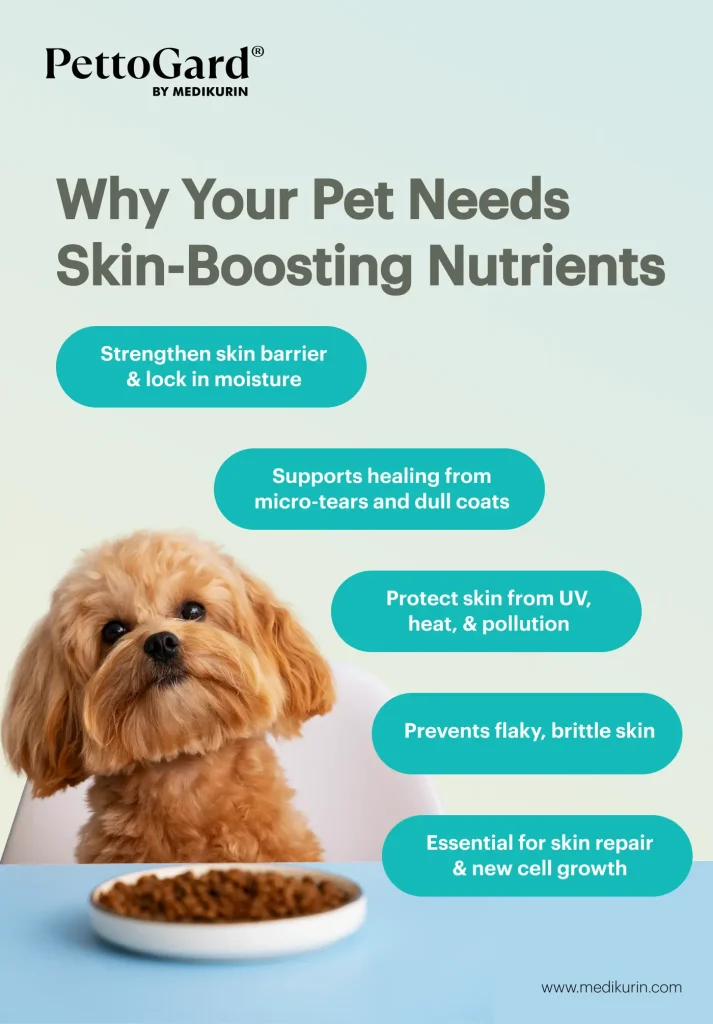
Healthy skin starts from within. Certain nutrients in pet food are essential for skin and coat health. Studies show omega-3 supplementation (EPA and DHA) directly leads to improved skin barrier function and reduced clinical signs in dogs with atopic dermatitis and allergies.
- Omega-3 & Omega-6 fatty acids: Reduce inflammation, promote a shiny coat, and calm itchy skin.
- Proteins: Support skin repair and coat growth.
- Vitamins & Minerals: Vitamins A, E, and zinc strengthen skin and protect against infections.
Tip: Check your dog’s food label for these key ingredients. High-quality, balanced food can help prevent common skin issues.
2. Common Ingredients That May Cause Skin Problems
Some dogs develop allergic reactions or sensitivities to certain ingredients in their food. Research suggests that about 10–20% of skin allergies in dogs stem from certain food ingredients, especially proteins. Common signs include ongoing itching, redness, rashes, hair loss, repeated ear infections, and sometimes gastrointestinal problems.
Common culprits include:
- Beef, chicken, or dairy are common protein triggers for dogs with food allergies, especially those with ongoing skin or ear problems)
- Corn, wheat, or soy fillers can trigger allergies, especially in dogs prone to atopic dermatitis or chronic itching.
- BHA, BHT, ethoxyquin, and artificial colors or flavors have been linked to allergic reactions and other health issues like skin irritation, poor coat quality, and possible long-term effects
For dogs with irritation or sensitive skin, a gentle and soothing shampoo can make all the difference. It is kind to your pet’s skin while creating a stronger foundation for a more resilient, beautiful coat.
3. How to Choose the Right Food
- When selecting food for your dog, consider:
- Hypoallergenic or limited-ingredient diets for dogs with sensitive skin
- Grain-free options if your dog shows signs of intolerance
- High-quality protein sources for healthy skin repair
- Omega-rich foods (like fish oil or flaxseed) for shiny coats
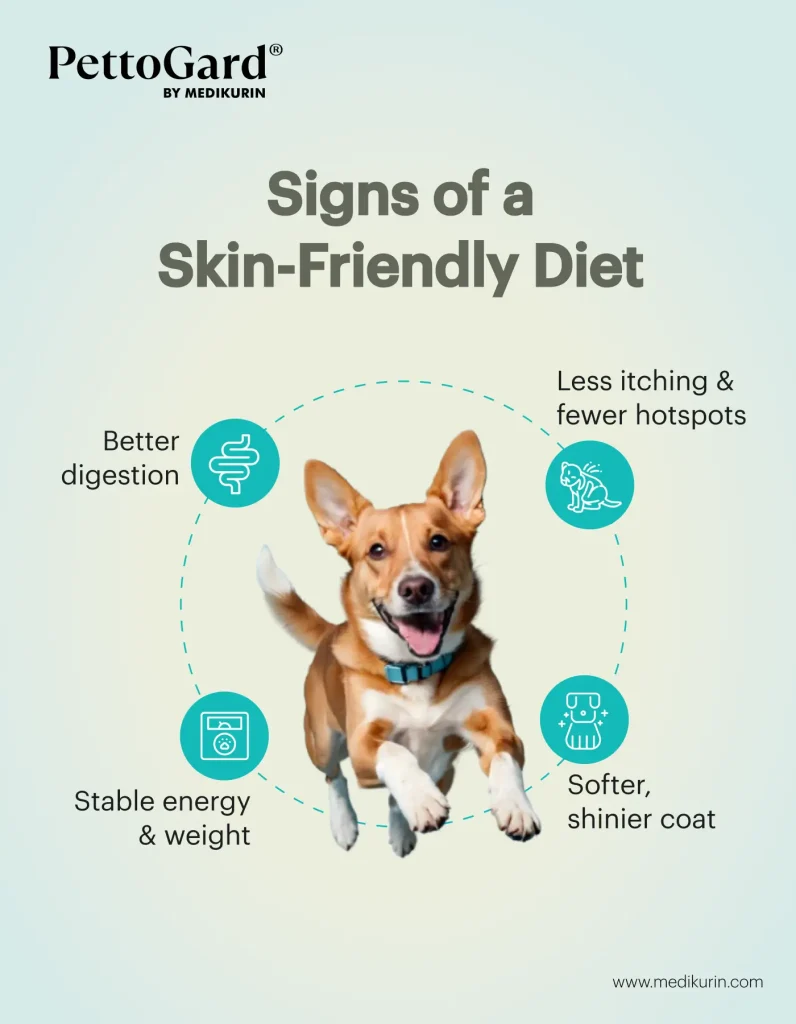
- Switching to a skin-friendly diet can reduce scratching and improve coat texture within a few weeks.
4. The Role of Hydration
Don’t forget water! Proper hydration is essential not just for your dog’s overall health, but also for maintaining healthy skin and a shiny coat. When dogs don’t drink enough, their skin can become dry, flaky, and more prone to irritation or infections.
Dehydration can also worsen existing skin conditions, making them harder to manage. Always ensure your dog has access to fresh, clean water throughout the day. It’s just as important as a balanced diet in keeping their skin comfortable, hydrated, and healthy.
5. Supplements Can Help, But Food Comes First
Some pawrents give vitamin or fatty acid supplements, which can support skin health. But supplements should complement a balanced diet, not replace it.
Your dog’s skin and coat reflect their overall health. By understanding how pet food affects your dog’s skin condition and choosing quality pet food with the right ingredients, you can help reduce itchiness, dryness, and allergic reactions, keeping your furry friend comfortable and happy.