
As any pet parent knows, seeing your furry companion in discomfort is heartbreaking. Whether it is a dog incessantly licking a raw “hot spot” or a cat struggling with a fungal infection, skin issues are among the most common reasons for veterinary visits today. Historically, the treatment landscape has been frustrating; owners often have to choose between harsh chemicals that sting and irritate, or “natural” remedies that lack the clinical strength to actually clear an infection.
This is where PettoGard has changed the narrative. By leveraging the science of Hypochlorous Acid (HOCl), PettoGard offers a solution that is simultaneously more powerful than traditional antiseptics and as gentle as pure water.
Key Takeaways
- PettoGard uses Hypochlorous Acid (HOCl), a substance naturally produced by white blood cells, making it both effective and gentle on the skin.
- HOCl helps fight bacteria, fungi, and other harmful microorganisms without damaging healthy skin cells involved in healing.
- Unlike harsh antiseptics, PettoGard is non-stinging and non-irritating, making it suitable for sensitive or inflamed skin.
- PettoGard can support a wide range of pet skin issues, including hot spots, redness, itching, fungal irritation, minor wounds, cuts, and post-surgery care.
- It is gentle enough for sensitive areas, including around the eyes, ears, and face when used carefully.
What Is Hypochlorous Acid (HOCl)?
Hypochlorous Acid, or HOCl, may sound clinical, but it is actually a substance the body already knows well. It is naturally produced by white blood cells as part of the immune system’s first line of defence against harmful microorganisms.
What makes it especially valuable in skin care is that it is:
- Naturally occurring in mammals
- Non-toxic and non-irritating
- Highly effective against bacteria, fungi, and viruses
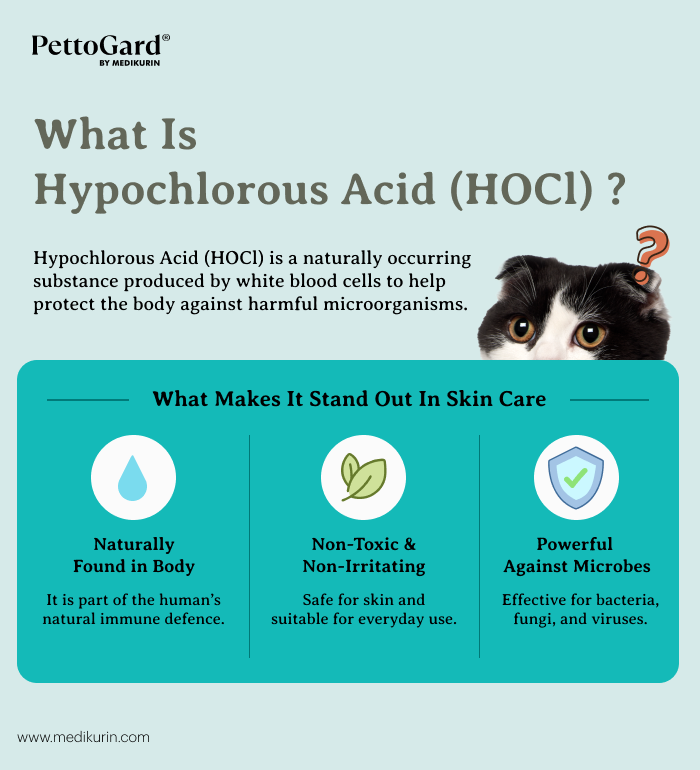
In simple terms, HOCl is one of the body’s own tools for fighting infection, making it inherently non-toxic. Unlike alcohol or hydrogen peroxide, which can damage healthy tissue while killing germs, HOCl selectively targets harmful microbes without harming the delicate cells responsible for healing.
How PettoGard Supports Healthy Pet Skin
PettoGard contains HOCI as its active ingredients, working in multiple ways to support skin recovery for a wide range of common pet skin conditions such as :
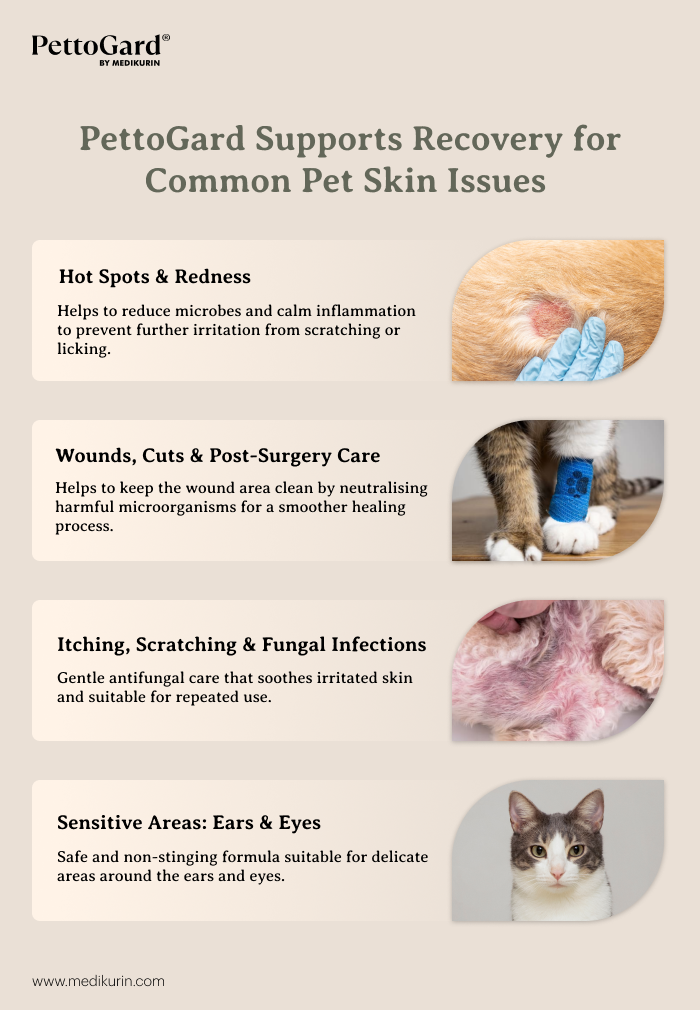
1. Hot Spots and Redness
It helps reduce microbial load on the skin while calming inflammation, preventing the area from worsening due to scratching or licking.
2. Minor Wounds, Cuts, and Post-Surgery Care
PettoGard cleans the wound environment by neutralising harmful microorganisms, supporting a cleaner and more stable healing process.
3. Itching, Scratching, and Fungal Infections
Its gentle, antifungal action helps soothe irritated skin without causing further sensitivity, making it suitable for repeated application.
4. Sensitive Areas: Ears and Eyes
Most antiseptics are too harsh for use around the face. PettoGard is gentle and non-stinging, and can be used cautiously around sensitive zones where harsher antiseptics may cause discomfort.
Why PettoGard Is More Effective Than Traditional Antiseptics
For years, the gold standards for pet disinfection were povidone-iodine or chlorhexidine. While effective at killing germs, they come with significant drawbacks. They often sting upon application, can stain fur and furniture, and most importantly, it can be toxic if a pet licks the area immediately after application.
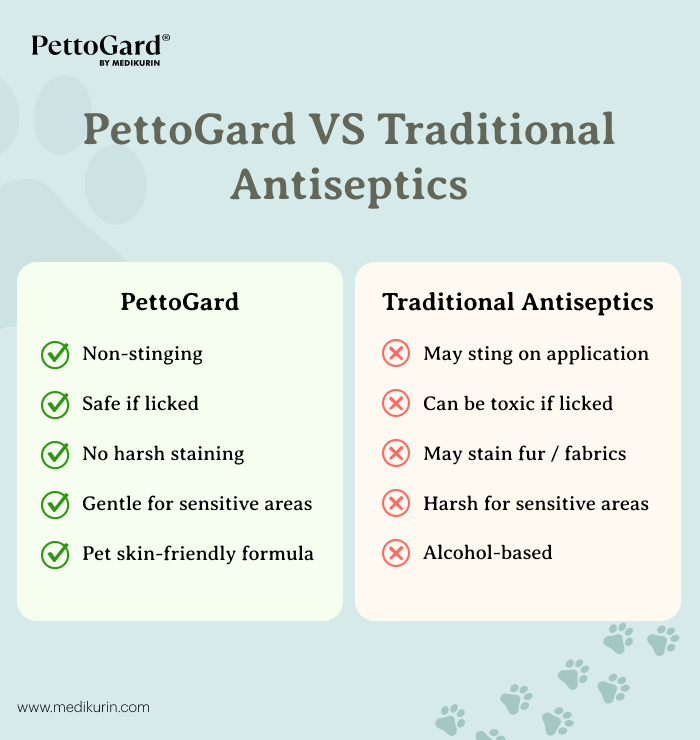
Pet owners increasingly prefer HOCl-based solutions like PettoGard because they are:
- Non-stinging, even on open or sensitive skin
- Non-toxic and safe if licked in small amounts
- Free from harsh alcohol or aggressive chemicals
- Gentle enough for use near eyes, ears, and delicate areas
- Supportive of the body’s natural healing response
Case Study
The clinical data is impressive, but the real-world results are even more compelling. Take the case of Waffle, a pet who struggled with a grueling cycle of skin allergies and
After starting a consistent routine with PettoGard Antimicrobial Skin Care & Wound Spray applied 2–3 times daily, early improvements appeared within about a week and a half. Redness eased and itching became less intense.
With continued use over the following weeks, his skin gradually recovered. His coat began to regrow, and flare-ups became less frequent as his skin condition stabilised.
To better understand how HOCI helps calm irritation and support healing in your cat or dog’s skin, read more here.
Scientific Support Behind HOCI
The move toward HOCl in pet care is supported by a growing body of veterinary and biomedical research. Studies in veterinary dermatology have explored its use in wound management, skin infections, abrasions, burns, and inflammatory skin conditions in animals.
Research has shown that HOCI — despite being gentle on the skin, demonstrates strong antimicrobial activity against a broad range of bacteria and fungi commonly associated with skin infections in cats and dogs. It is also being studied for its role in supporting faster wound healing by reducing microbial burden without damaging healthy tissue.
In veterinary wound care literature, HOCl is increasingly recognised for its dual function: controlling infection while maintaining a moist and balanced healing environment. This makes it particularly valuable in managing both acute injuries and chronic dermatological conditions.
Conclusion
Pet owners are increasingly seeking out solutions that are science-backed, vet-friendly, and gentle enough for daily use. Harsh chemicals are falling out of favor as we learn more about the delicate ecosystem of the skin.
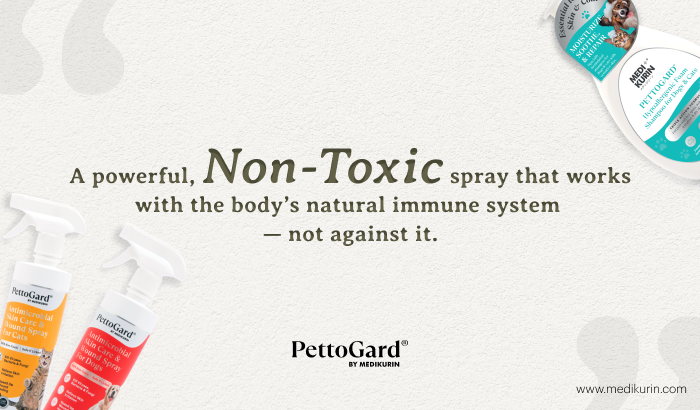
PettoGard represents the next generation of pet care: a powerful, non-toxic spray that works with the body’s natural immune system, not against it. Whether you are managing a chronic allergy, an acute hot spot, or simply want a safer option for minor nicks and scratches, switching to PettoGard Antibacterial Spray with HOCl-based solution offers peace of mind.
FAQs
1. How does Hypochlorous Acid (HOCl) work?
HOCl works by helping reduce harmful bacteria, fungi, and other microorganisms on the skin while remaining gentle on healthy tissue. Unlike harsher antiseptics that may damage healing skin, HOCl supports a cleaner healing environment without causing additional irritation, making it a popular choice for both prescription and non-prescription skincare products. This helps the skin recover more comfortably and naturally.
2. Is PettoGard suitable for pets with allergies or sensitive skin?
Yes. Many pets with allergies or recurring skin sensitivity benefit from gentler skin support. Since PettoGard contains no harsh alcohol and is non-irritating, it is suitable for frequent use without overly drying or stressing sensitive skin.
3. What skin problems can PettoGard help with?
PettoGard is commonly used to support recovery from a variety of skin issues, including hot spots, redness, itchiness, fungal infections, minor cuts, abrasions, skin allergies, and irritated skin caused by scratching or licking. It may also be used as part of post-surgery wound care under veterinary guidance.
4. Is PettoGard Antibacterial Spray safe for both cats and dogs?
Yes. PettoGard Antibacterial Spray is formulated for use on both cats and dogs. Since it is powered by Hypochlorous Acid (HOCl), a substance naturally produced by the immune system, it is gentle, non-toxic, and suitable for regular use. This makes it especially useful for pets with sensitive skin or those prone to recurring irritation.
5. How often should I apply PettoGard Antibacterial Spray?
Frequency depends on your pet’s condition, but many pet owners apply it 2–3 times daily for irritated skin, hot spots, or minor wounds. Consistency is important, especially for recurring skin issues or ongoing recovery. Always follow product instructions or veterinary advice for best results.