
The skin is your dog’s largest organ, contributing up to 24% of their body weight, which is why it’s one of the best indicators of their overall health. A shiny coat and smooth skin usually mean they’re happy and thriving, but if your furry friend keeps scratching, biting, or developing patches of redness, it might be time to look closer. Dog skin issues are a common concern among pet owners, and while they can be frustrating, the good news is that most dog skin issues are treatable and often preventable.
Common Dog Skin Problems
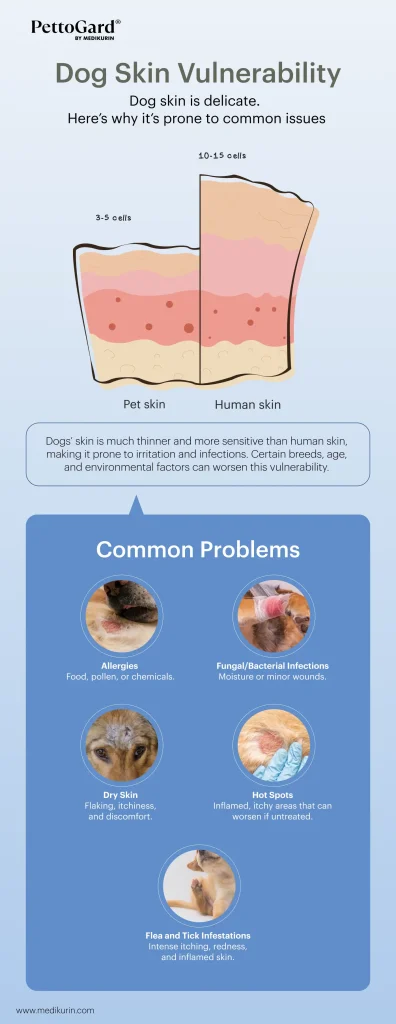
Crucially, your dog’s skin is structurally much thinner than yours. The protective outer layer (epidermis) in dogs is only 3–5 cells thick, compared to the 10–15 cell layers we have. This delicate barrier, along with a less acidic pH, makes their skin less robust and naturally more prone to infections from bacteria and fungi.
1. Allergies
Dogs can be allergic to many things; pollen, dust, grass, certain foods, or even flea bites. Allergies often cause excessive scratching, licking, or red patches, especially around the paws, ears, and belly.
2. Flea and Tick Infestations
These tiny parasites cause major discomfort. A study found that Rhipicephalus sanguineus (brown dog ticks) were present on almost all stray dogs in Kuala Lumpur, showing how widespread tick infestations are.
Apart from biting, dog fleas can trigger allergic reactions known as flea allergy dermatitis, which leads to inflamed and itchy skin. Both parasitic infestations and allergic dermatitis are among the most frequent causes of dog skin issues
3. Dry Skin
Dry or flaky skin can be caused by weather changes, poor diet, or harsh shampoos. It makes your dog’s coat dull and uncomfortable, sometimes leading to constant scratching.
4. Fungal and Bacterial Infections
Fungal infection or Dermatophyte is the most common fungal infection in stray dogs, with one Selangor study finding Trichophyton spp. in over 60% of cases. It often appears around the ears or paws, causing odor and irritation. Bacterial infections can develop when your dog scratches an open wound excessively.
5. Hot Spots
Also known as acute moist dermatitis, these are red, moist, and painful patches that spread quickly if not treated. They’re usually caused by constant scratching, licking, or biting at one spot.
Signs Your Dog May Have a Skin Problem
- Persistent scratching, licking, or chewing
- Redness or inflammation
- Bald spots or hair loss
- Scabs or crusty patches
- Unpleasant odor from the skin or ears
- Dandruff or flakiness
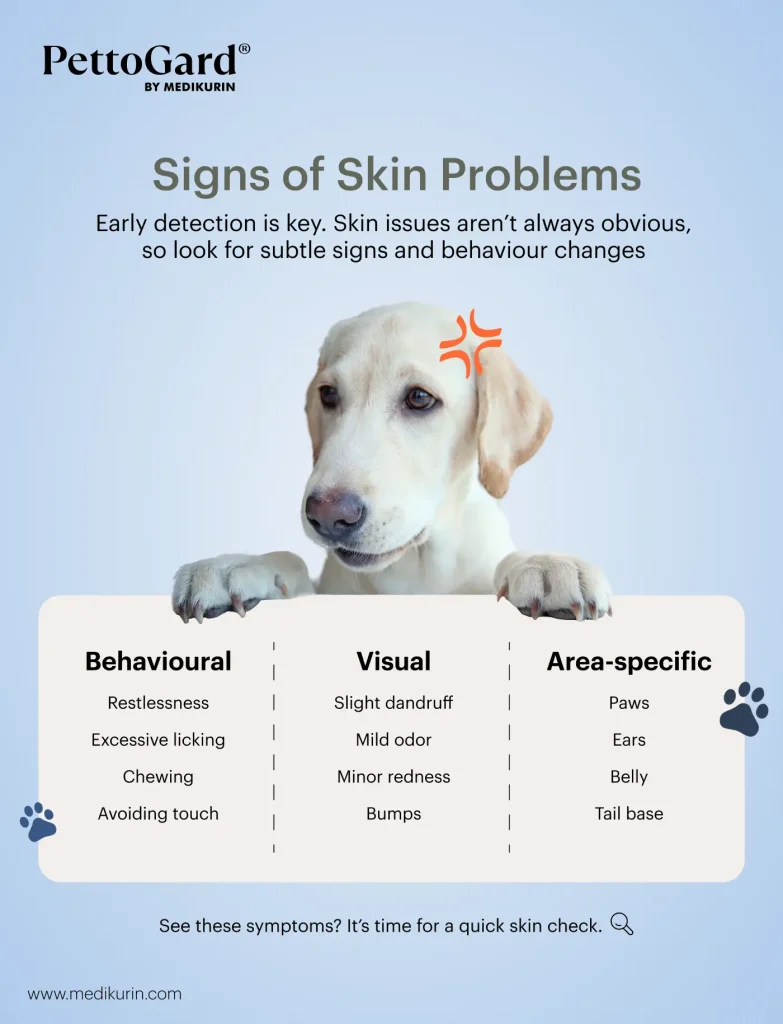
If you notice one or more of these symptoms, it’s best to consult your vet for a proper diagnosis.
How to Prevent and Overcome Skin Problems
1. Keep Up with Regular Grooming
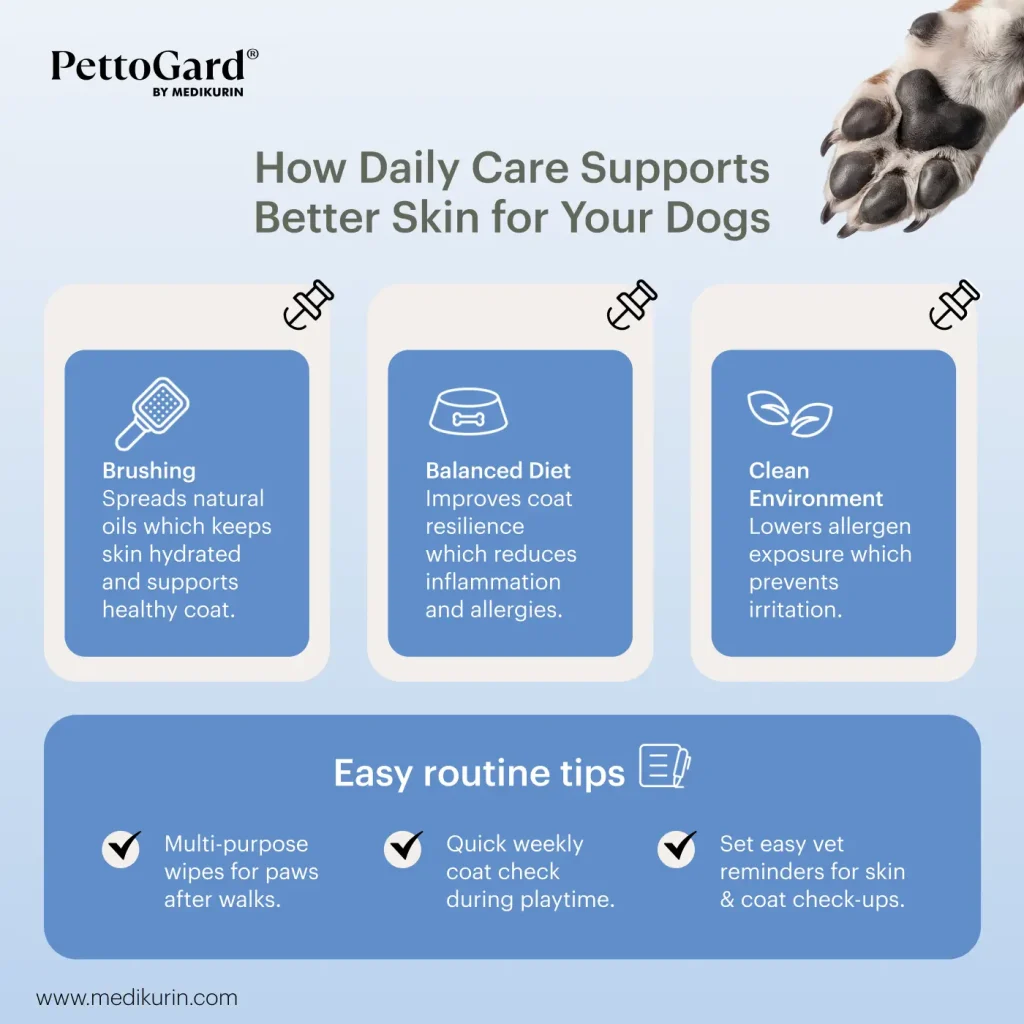
Brush your dog regularly to remove dead hair, dirt, and tangles. This helps distribute natural oils, keeping their skin moisturized and healthy.
2. Use Gentle, Skin-Friendly Products
Always opt for mild, pH-balanced shampoos designed for dogs. Products with natural ingredients such as aloe vera or oatmeal can help soothe sensitive skin. Opt for a gentle, dog shampoo for sensitive skin such as PettoGard Hypoallergenic Foam Shampoo for Dogs & Cats.
3. Maintain a Balanced Diet
Skin health starts from the inside out. Omega-3 and Omega-6 fatty acids found in fish oil or dog supplements can improve coat shine and reduce inflammation.
4. Protect Against Fleas and Ticks
Use approved flea and tick prevention methods regularly sprays, spot-on treatments, or oral medications to keep parasites away such as PettoGard Flea & Tick Foam Shampoo for Dogs & Cats. It utilizes a triple-action formula to simultaneously moisturize the skin, alleviate irritation and itchiness, and repair damage resulting from tick and flea bites. It comes in spray too!
5. Keep Their Environment Clean
Environmental cleanliness and proper grooming play a major role in reducing skin infections and allergies. Wash your dog’s bedding and toys weekly with mild detergent, vacuum regularly to remove hair and dust, and keep their area dry and well-ventilated with PettoGard Odor Remover Spray. Wipe their paws after walks to remove dirt or allergens that can cause itching with antibacterial spray or dry shampoo by PettoGard.
6. Regular Vet Visits
Many skin problems can spread from pets to humans, making awareness, early checks, and regular vet visits essential. This is also vital so the vet knows how to treat your dog skin problems early, before they worsen. Your vet can also advise on diet, grooming, and parasite prevention to keep your dog’s skin healthy year-round.
Your pet relies on you for comfort and care. Paying attention to small changes like extra scratching or a dull coat can help prevent more serious dog skin issues. With the right diet, grooming habits, and gentle skin products, you can keep your furry friend itch-free, comfortable, and glowing with health all year round.