
Skin conditions represent some of the most frequent health concerns for both dogs and cats. These issues often begin with subtle behaviors, such as a dog chewing its paw or a cat grooming a specific area until the fur thins. While these actions may appear harmless initially, skin problems can escalate rapidly if the underlying cause remains unaddressed.
The skin serves as the body’s primary line of defense. When this barrier is compromised, discomfort follows immediately. Pets typically respond by scratching, licking, or biting the affected area, which often worsen the condition. Effective care focuses on understanding the biological processes beneath the surface and selecting treatments that support healing without causing further irritation.
Key Takeaways
- Skin problems in dogs and cats are very common and often start with mild signs like itching, redness, or excessive licking.
- Excess scratching or licking is usually a symptom of an underlying issue, not the root cause, and can delay healing.
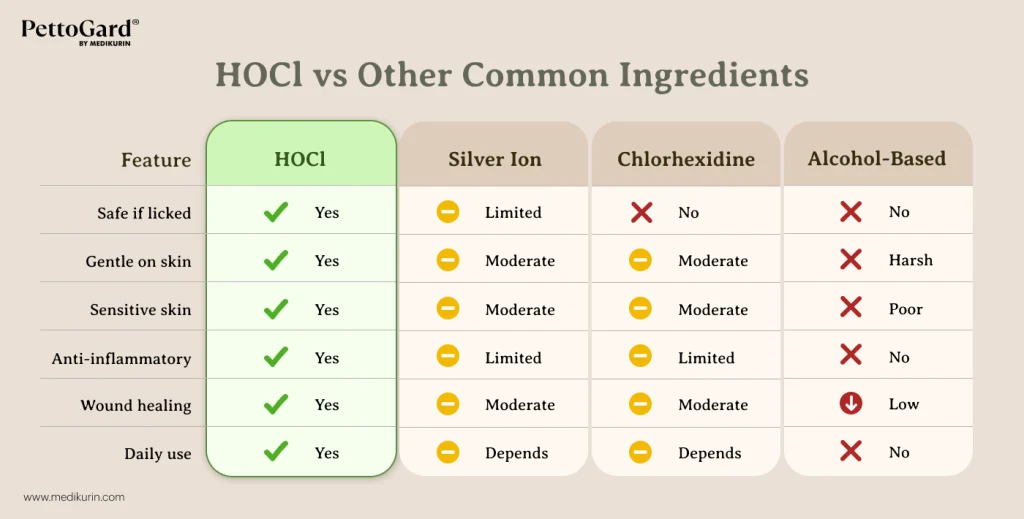
- Common treatments like chlorhexidine, iodine, silver, and alcohol-based sprays are effective but may cause dryness, staining, or irritation in some pets.
- Hypochlorous Acid (HOCl) is gaining attention because it helps control microbes while remaining gentle, non-stinging, and suitable for sensitive skin.
- HOCl-based care is often better tolerated by pets and can be used more consistently, which supports gradual healing.
- For everyday skin issues, HOCl-based solutions like PettoGard offer a balanced approach between effectiveness and comfort.
- Severe or persistent skin conditions should still be assessed by a veterinarian, but mild issues can often be supported with proper topical care.
Common Skin Problems in Dogs and Cats
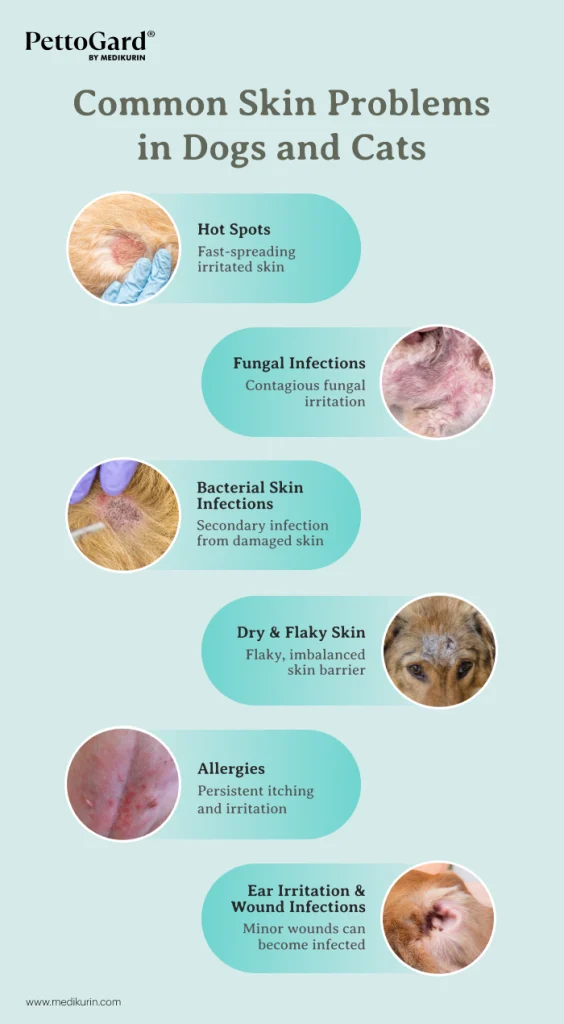
Hot Spots
Hot spots (acute moist dermatitis) are one of the fastest-developing skin issues in dogs. They often start small but worsen quickly due to constant licking or scratching.
- Triggered by fleas, allergies, moisture, or irritation
- Rapid progression within hours
- Skin barrier breaks down from repeated licking/scratching
- Leads to red, moist, painful, inflamed patches
Fungal Infections
Fungal infections such as ringworm tend to develop more slowly but are highly contagious between pets and sometimes humans.
- Thrive in warm, humid environments
- More common in pets with weaker immune systems
- Feed on keratin in skin and hair
- Symptoms include circular bald patches, scaly skin, and rough fur
- Typically appear dry rather than wet or oozing
Bacterial Skin Infections
Bacterial infections (pyoderma) often develop secondary to other skin problems like wounds, allergies, or hot spots.
- Enter through broken or damaged skin
- Cause redness, swelling, and bumps or pustules
- May produce a noticeable odour
- Can spread deeper if left untreated
- Often linked to excessive scratching or licking
Dry and Flaky Skin
Dry skin is common but often overlooked, and it usually reflects an imbalance in skin health.
- Caused by low humidity, frequent bathing, or harsh shampoos
- Can also be linked to poor nutrition or allergies
- Signs include white flakes and dull coat appearance
- Not always serious, but may lead to secondary irritation if scratching continues
Allergies
Allergies are one of the most complex skin issues because they can come from multiple sources and affect the whole body.
- Triggers include food, pollen, dust mites, and fleas
- Often cause full-body itching rather than one area
- Common signs: paw chewing, ear irritation, facial scabs
- Leads to repeated scratching and skin damage over time
- Symptoms often recur if the trigger is not managed
Ear Irritation and Wound Infections
Skin health is closely connected to ear and wound conditions, which can worsen quickly if not addressed.
- Ear irritation often linked to moisture or yeast buildup
- Symptoms include head shaking, discharge, and scratching
- Minor wounds can become infected if bacteria enter the skin
- Warning signs include heat, swelling, redness, or slow healing
- Persistent cases may require veterinary attention
Common Treatment Ingredients in the Market
There are many topical treatments available for pet skin problems, each designed for different needs depending on the severity and type of condition. Understanding how these ingredients are commonly used can help pet owners make more informed choices.
1. Chlorhexidine
Chlorhexidine is one of the most widely used antiseptic ingredients in veterinary care due to its broad antibacterial and antifungal properties. It is commonly found in medicated shampoos, sprays, and cleansers for pets dealing with recurring skin infections or irritation. Many veterinarians recommend it as part of skin management routines, although pets with highly sensitive skin may benefit from gentler formulations or adjusted frequency of use.
2. Povidone-iodine
Povidone-iodine is a trusted antiseptic often used to disinfect minor wounds and help reduce harmful microorganisms on the skin. It is commonly used in both veterinary and medical settings because of its broad-spectrum effectiveness. Due to its strong pigmentation, it may leave temporary staining on fur or surfaces, which some pet owners consider during regular use.
3. Silver ion
Silver ion-based products are often used in wound and skin care because of their antimicrobial properties. They are particularly common in products formulated for skin issues or wounds that require additional support. Depending on the product type, they may be positioned more toward targeted care rather than everyday maintenance.
4. Alcohol-based sprays
Alcohol-based sprays are commonly used for quick cleansing and disinfection, particularly for surface-level concerns. Because they evaporate quickly, they are often chosen for convenience. Pets with inflamed or highly sensitive skin may respond better to milder alternatives, especially for repeated application.
5. Hypochlorous Acid (HOCl)
HOCI is naturally produced by white blood cells as part of the immune system. In topical form, it helps reduce bacteria, fungi, and viruses while remaining gentle on the skin. It does not sting, which makes it easier for pets to tolerate, especially for repeated use.
Why HOCl Is Becoming Popular in Veterinary Skin Care
Veterinary dermatology is increasingly moving toward solutions that are both effective and gentle. HOCl fits into this shift because it does not force a compromise between strength and comfort.
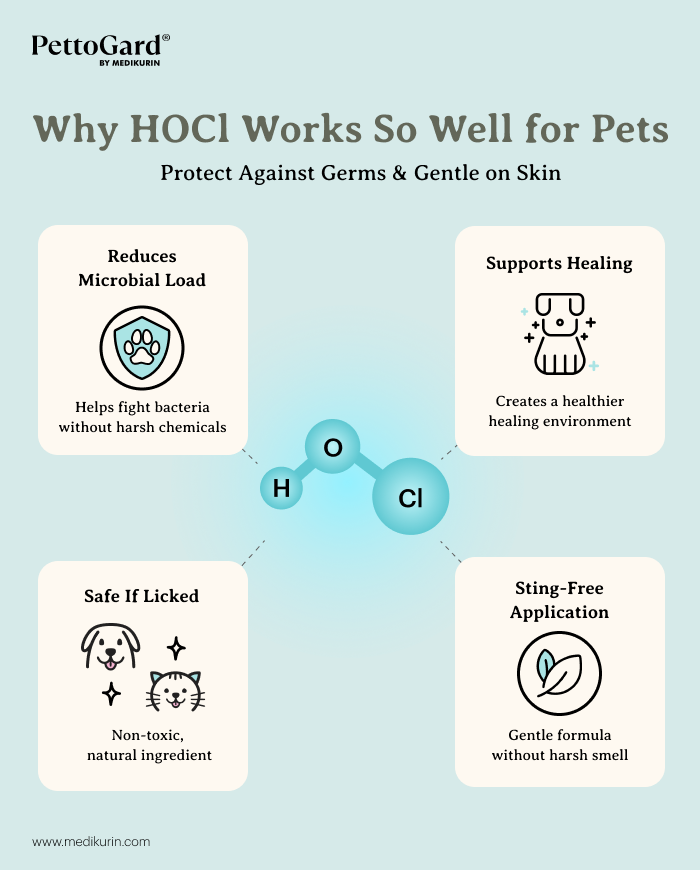
Research in veterinary wound care has shown that HOCl can help manage microbial load while supporting a healthy healing environment. It is used in cases such as hot spots, surgical wounds, dermatitis, and minor infections.
Because the solution does not sting or have a harsh odour, pets are less likely to resist application. Furthermore, the non-toxic nature of the ingredient provides peace of mind for owners whose pets tend to lick treated areas.
This is why HOCl-based solutions such as PettoGard are becoming more common in everyday pet care routines. They are used for managing redness, itching, minor wounds, and recurring skin irritation in a way that is easier to maintain consistently. Learn more on HOCI-based solutions here.
If you are curious about how HOCl-based solutions work, read our article here.
Case Study
1. Waffle, 4 years old puppy
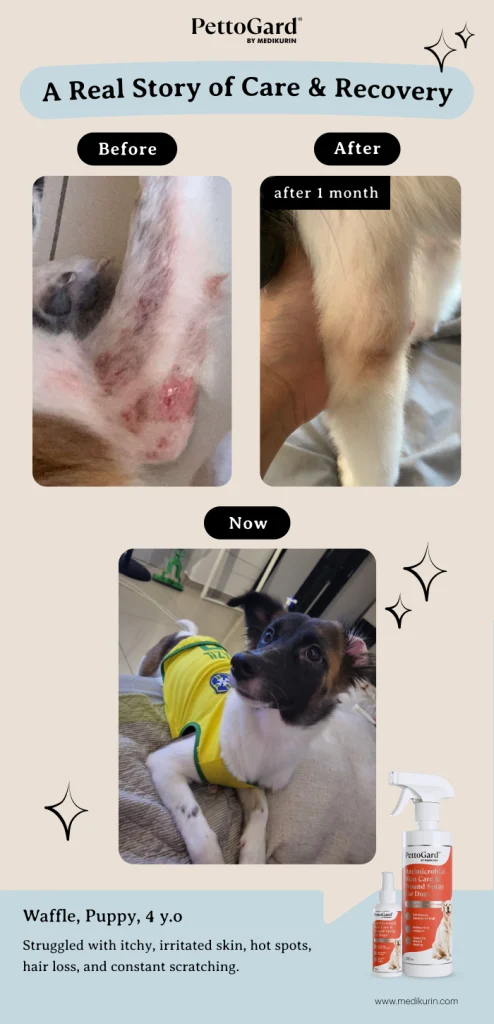
Waffle struggled with recurring skin allergies that led to hot spots, redness, constant itching, and noticeable hair loss. The irritation kept coming back because the more he scratched, the worse the inflammation became.
After starting a consistent routine using a Hypochlorous Acid (HOCl)-based spray from PettoGard 2–3 times daily, his skin began to calm within about a week. Redness reduced, itching became less intense, and over continued use for several weeks, his skin gradually stabilised. His coat also started to regrow as the irritation cycle was brought under control.
2. Miko, 5 years old male cat
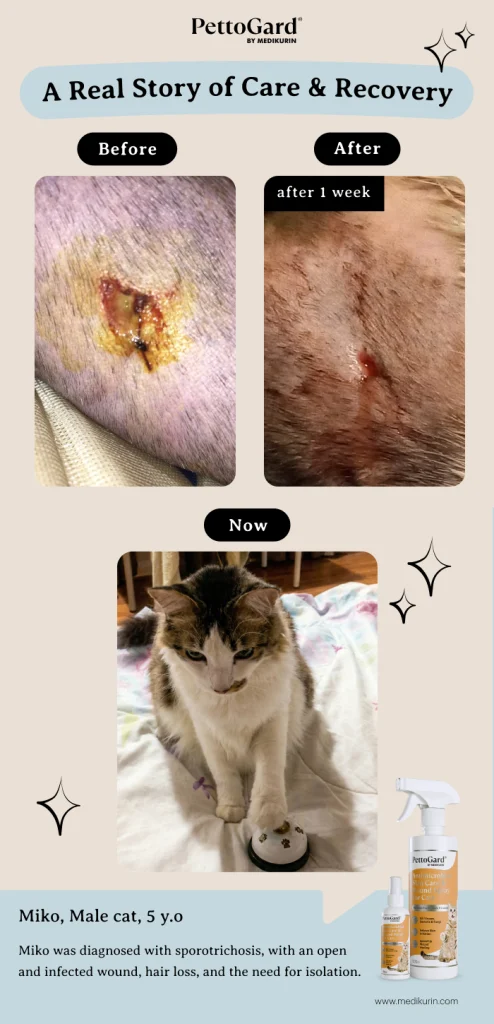
Miko faced a more severe condition after being diagnosed with sporotrichosis, a fungal infection that caused persistent wounds and required strict veterinary management, including isolation and daily wound care.
After completing initial vet treatment, recovery continued at home with supportive care using PettoGard Antimicrobial Skin Care & Wound Spray for Cats. The HOCl-based formula helped maintain a clean wound environment and supported skin recovery during the healing phase.
Within two weeks, visible improvement was observed, and new fur growth began to appear. By late July, Miko had made a full recovery, returning to normal comfort and activity levels.
Conclusion
Skin problems in dogs and cats are common, but they are also manageable when understood early. Conditions like hot spots, allergies, fungal infections, and minor wounds all share one thing in common: they worsen when irritation continues unchecked.
While there are many treatment options available, the most effective approach is often the one that pets can tolerate consistently. Harsh products may work quickly but are not always suitable for repeated use. Gentler solutions that support the skin’s natural healing process are becoming increasingly preferred.
HOCl-based care, including products like PettoGard, represents this shift. It is not about replacing veterinary treatment when needed, but about providing a safe, practical option for everyday skin issues, especially the itchy, red, and irritated moments that every pet owner eventually encounters.
FAQs
1. Which ingredient is best for pets with sensitive skin?
Pets with sensitive or inflamed skin often benefit from gentler solutions. While stronger antiseptics may work well for certain conditions, some pets tolerate milder options better for repeated use. HOCl-based solutions such as PettoGard, for example, are increasingly chosen because they are non-stinging and gentle enough for irritated skin.
2. Can pet skin problems heal on their own?
Some minor irritation may improve naturally, especially if the trigger is removed. However, many skin conditions worsen because pets continue licking or scratching the area. Early care is usually more effective than waiting for symptoms to resolve on their own.
3. Are HOCl-based solutions only for wounds?
No. While commonly used for minor wounds and cuts, HOCl-based products like PettoGard are also used for hot spots, irritated skin, redness, allergies, scratching, and general skin hygiene. Their gentle profile makes them suitable for repeated care in many everyday skin concerns.
4. How can I support healthier skin in the long term?
Good grooming, balanced nutrition, parasite prevention, regular skin checks, and early treatment of minor irritation all play an important role. Consistency in care often matters more than reacting only when symptoms become severe.
5. How do I know if my pet’s skin problem needs a vet?
If the condition spreads quickly, smells unusual, produces discharge, causes bleeding, or does not improve with proper care, veterinary attention is recommended. Recurring hot spots, severe itching, or persistent skin infections may also require professional treatment.