
Dog tear stains are a common cosmetic and sometimes health concern for dog owners, especially in breeds with light-colored fur or characteristic facial anatomy. This article breaks down the causes, prevention, and care strategies you need to know to keep your dog comfortable and looking their best.
Key Takeaways
- Tear staining is common, especially in certain breeds, and is often linked to facial structure and tear drainage rather than poor hygiene.
- Excess tears contain natural pigments (porphyrins) that can leave reddish-brown stains when they sit on the fur.
- Flat-faced and small dog breeds are more prone due to shallow eye sockets and narrow tear ducts.
- One-sided or sudden tear staining may signal irritation, blockage, or early infection and should be monitored.
- Persistent staining with redness, swelling, discharge, or odor requires veterinary evaluation.
What Is Tear Staining?
Dog tear stains are the reddish-brown marks you may notice on the fur beneath your dog’s eyes. They develop when tears overflow onto the face and leave behind natural compounds called porphyrins.
Porphyrins contain iron and are normally present in tears. When moisture sits on the fur for extended periods, these compounds accumulate and gradually darken the hair, creating visible staining.
Why Does My Dog Have Tear Stains?
Tear staining can occur for several reasons, often involving a combination of facial structure, tear drainage, and everyday environmental factors. While dogs produce tears to lubricate and protect their eyes, they are not able to effectively clean the surrounding fur and skin on their own.
Over time, moisture and discharge can accumulate around the eye area, creating an environment where staining and irritation are more likely to develop. Understanding these influences can help you manage staining more effectively and recognise when it may require further medical attention.
1. Facial Anatomy and Tear Drainage
Certain breeds, especially brachycephalic (flat-faced) breeds like Bulldogs, Pugs, Shih Tzus, and Boston Terriers are prone to tear staining due to shallow eye sockets and compressed tear ducts that don’t drain tears efficiently.
2. Tear Duct Blockage
Tears normally drain through small ducts at the inner corner of the eye. If these ducts are too narrow or become blocked by dirt, swelling, or infection, the tears cannot drain properly into the nose.
When this happens, tears spill over onto the face instead, leading to constant wetness and visible tear stains. If the blockage continues, it can also cause skin irritation around the eyes and may need veterinary attention to resolve the underlying issue.
3. Persistent Watery Eyes
Eye irritation, from allergies, debris, wind, smoke, or environmental irritants can trigger excessive tearing. Even normal tear production can result in staining when the fluid isn’t drained efficiently.
One common cause of eye irritation that leads to excessive tearing and staining is distichiasis, a condition where extra eyelashes grow in the wrong direction and rub against the eye.
4. Hygiene and Dog Facial Fur Management
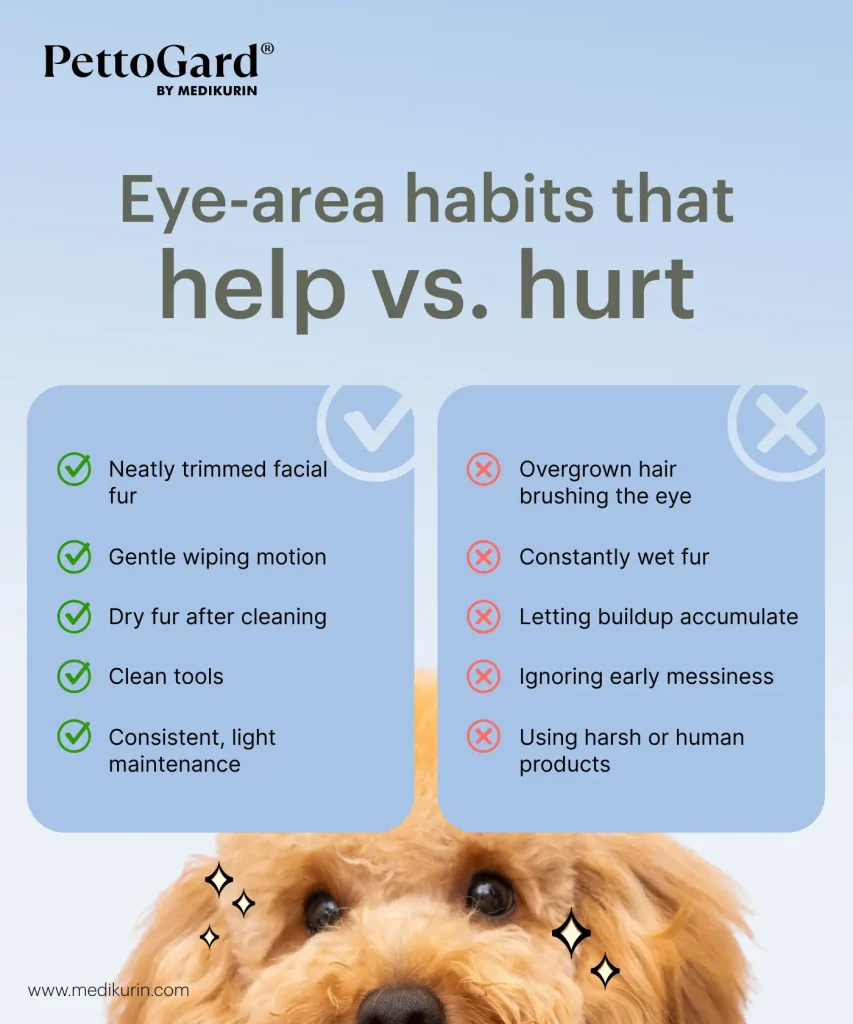
Moisture, dirt, and debris can easily accumulate around the eye area, especially in dogs with long or dense facial hair. When tears are not wiped away regularly, the fur stays damp, creating an ideal environment for bacteria and yeast to grow.
Over time, this buildup can darken the fur and worsen tear staining. Long hair around the eyes may also rub against the surface of the eye, causing mild irritation and triggering even more tearing. Regular cleaning and proper trimming of facial fur help reduce moisture retention and keep the eye area cleaner and healthier.
5. Other Health Factors
Eye infections, eyelid abnormalities, and conditions such as conjunctivitis can cause irritation and increase tear production. When tears overflow and do not drain properly, staining becomes more noticeable.
In some cases, tear staining may signal an underlying problem rather than just a surface issue. If it is persistent or accompanied by redness, swelling, or discharge, it is best to consult your vet.
How to Remove Tear Stains in Dogs
1. Routine Cleaning and Grooming
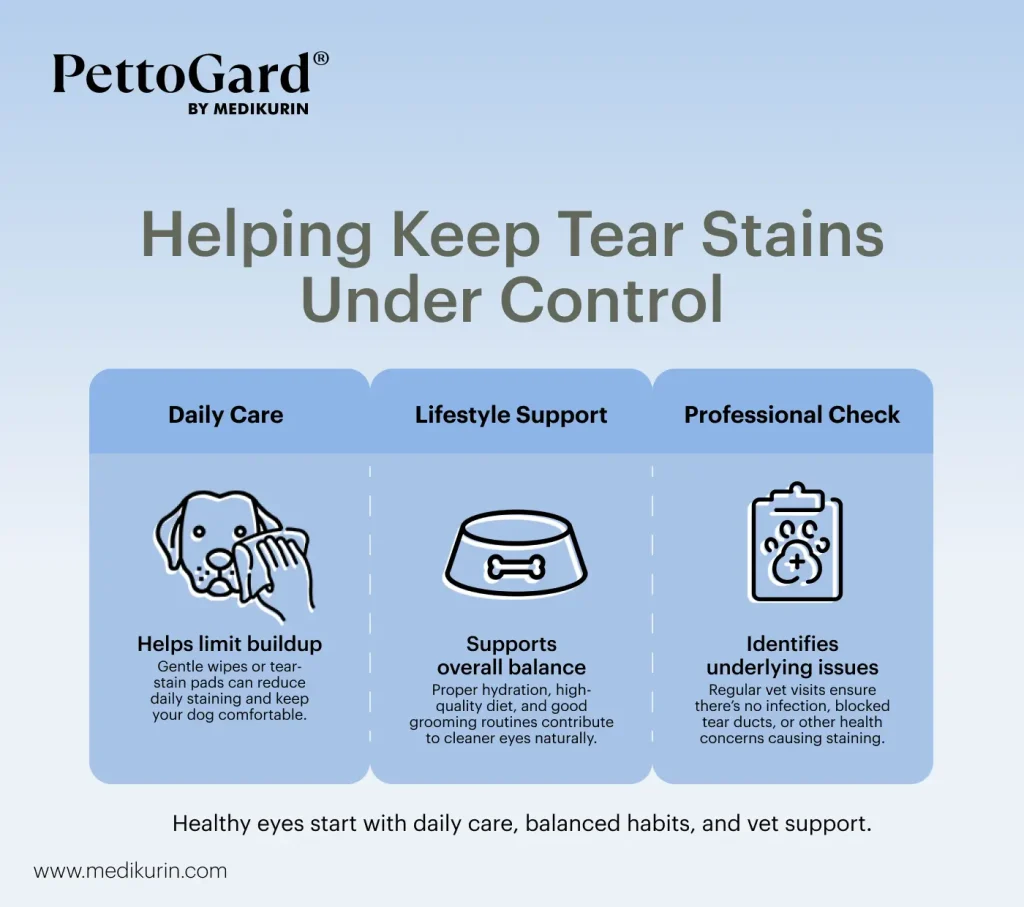
Keep the area around your dog’s eyes clean and dry. Daily cleaning with a soft, damp cloth or gentle pet-safe eye wipes can help remove tear residue before staining becomes visible.
If you’re using a grooming product, choose one that is formulated for the delicate eye area, non-irritating, and safe even if accidentally licked, such as PettoGard Antimicrobial Skin Care & Wound Spray for Dogs. Regular trimming of long facial hair also helps reduce tear retention and moisture buildup. For more details and tips, read our pet grooming article here.
2. Proper Nutrition and Hydration
Ensuring clean drinking water and high-quality food can support overall health. Some dogs respond positively to dietary changes that reduce allergens or lower porphyrin production.
3. Veterinary Evaluation
If your dog’s tear staining looks heavy, doesn’t improve, or comes with redness, discharge, or signs that they’re uncomfortable, it’s a good idea to have your vet take a look. This helps rule out eye infections or structural issues early on.
Some breeds, like Pugs, are more prone to eye problems with clinic studies reporting rates as high as 29%, so a quick check can give you peace of mind.
1. Routine Cleaning and Grooming
Keep the area around your dog’s eyes clean and dry. Daily cleaning with a soft, damp cloth or gentle pet-safe eye wipes can help remove tear residue before staining becomes visible.
If you’re using a grooming product, choose one that is formulated for the delicate eye area, non-irritating, and safe even if accidentally licked, such as PettoGard Antimicrobial Skin Care & Wound Spray for Dogs. Regular trimming of long facial hair also helps reduce tear retention and moisture buildup. For more details and tips, read our pet grooming article here.
2. Proper Nutrition and Hydration
Ensuring clean drinking water and high-quality food can support overall health. Some dogs respond positively to dietary changes that reduce allergens or lower porphyrin production.
3. Veterinary Evaluation
If your dog’s tear staining looks heavy, doesn’t improve, or comes with redness, discharge, or signs that they’re uncomfortable, it’s a good idea to have your vet take a look. This helps rule out eye infections or structural issues early on.
Some breeds, like Pugs, are more prone to eye problems with clinic studies reporting rates as high as 29%, so a quick check can give you peace of mind.
Why Eye Care Should Be Part of Your Dog’s Routine
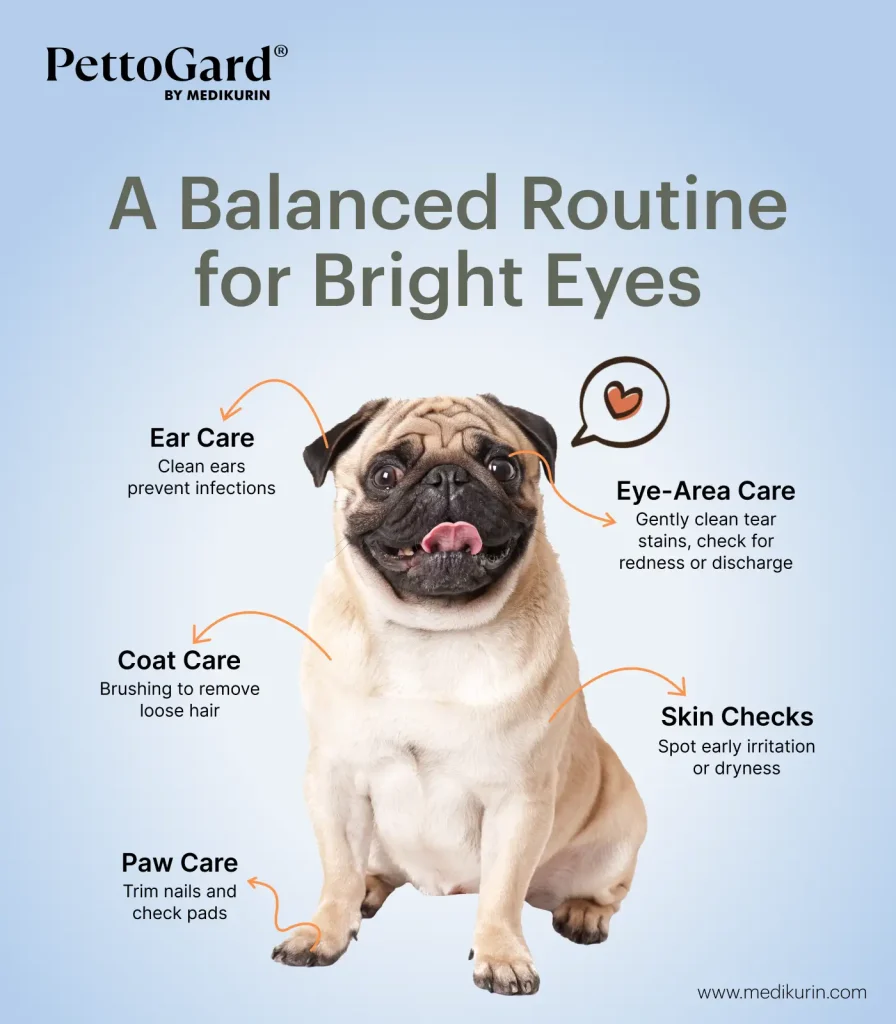
While tear staining primarily originates from watery eyes and movement, maintaining healthy skin around the eyes also plays a supportive role in overall hygiene and irritation prevention.
Using products formulated for sensitive dog skin, especially those that are gentle, non-toxic, and safe around delicate areas can help prevent secondary irritation that sometimes compounds tear staining concerns.
For example, PettoGard Antimicrobial Skin Care & Wound Spray For Dogs is a topical spray designed to:
- Provide antimicrobial, antibacterial, and antifungal cleansing
- Help soothe itchy or irritated skin
- Promote faster healing of minor skin issues
- Safe if licked, and suitable for use around eyes, nose, and ears when applied appropriately
Spray onto a clean cotton pad and gently wipe around tear-prone areas, avoiding direct contact with the eyes. Use 3-4 times daily or during grooming routine, if needed. This may indirectly help reduce irritation and eye infection over time. Including such products in a dog’s grooming routine, alongside careful eye cleaning, can support skin health and hygiene.
When to Seek Veterinary Care
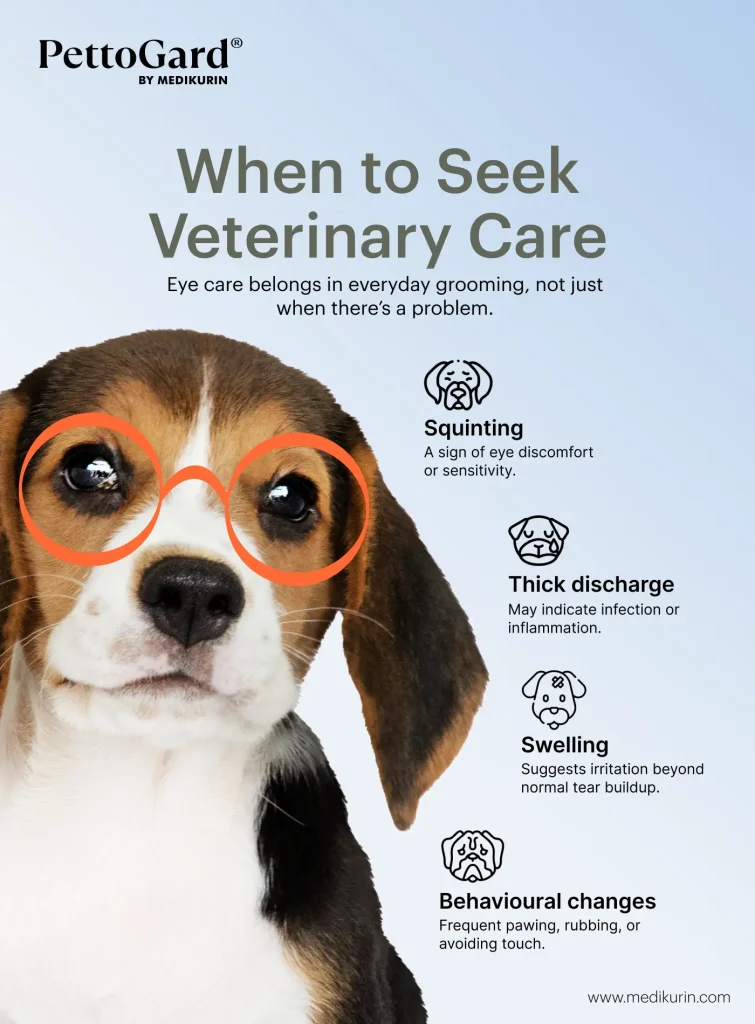
Although most tear staining is non-dangerous, immediate veterinary attention is recommended if you notice:
- Pain, squinting, or excessive pawing at the eyes
- Thick or colored discharge such as red, brown, or rust-colored streaks
- Swelling, redness, or signs of infection
- Tear staining accompanied by with other health changes
A professional examination ensures conditions like blocked ducts, conjunctivitis, or other eye disorders are accurately diagnosed and treated.
Conclusion
Dog tear stains are a multifactorial issue rooted in genetics, anatomy, hygiene, and sometimes underlying health conditions. While regular grooming and cleaning are the primary tools for managing dog tear stains, it is important to monitor for signs of eye infection such as redness, swelling, or frequent pawing at the eyes. These symptoms require veterinary evaluation.
Complementary products like PettoGard Antimicrobial Skin Care & Wound Spray for Dogs can help maintain skin hygiene and comfort around the eye area when used as directed. Understanding the causes and appropriate care options will help you keep your dog healthy, comfortable, and looking its best.
FAQs
1. Is tear staining always caused by poor hygiene?
Not necessarily. In many dogs, tear staining is linked to anatomical factors such as shallow eye sockets, narrow or poorly draining tear ducts, or breed-related facial structure.
Mild inflammation, eyelid positioning, or excess tear production can also contribute. Good hygiene helps reduce moisture buildup and discoloration, but it does not correct structural or drainage-related issues.
2. Why does tear staining sometimes have a rusty smell?
A slight rusty or sour odor usually indicates that moisture has been sitting on the fur for an extended period. Constant dampness creates an environment where yeast or bacteria can grow.
When microbial overgrowth develops, it may produce a noticeable smell and increase the risk of skin irritation beneath the eyes. In such cases, improving drying practices and consulting a veterinarian may be advisable, especially if redness or stickiness is present.
3. I clean my dog’s eyes daily, but staining keeps returning. Why?
Daily cleaning removes surface tears and helps keep the area tidy, but it does not address why tears are overflowing. If your dog naturally produces more tears or has inefficient tear drainage, staining will recur despite regular wiping.
Persistent staining suggests an underlying anatomical, inflammatory, or breed-related factor that may require professional assessment to determine appropriate management.
4. Can I just trim the stained fur?
Trimming can immediately improve appearance by removing discoloured hair. However, if tear overflow continues, new fur will eventually stain again.
Trimming should be viewed as part of maintenance rather than a solution. Long-term control requires identifying contributing factors such as facial structure, tear duct function, irritation, or hygiene practices.
5. Can I use human wipes or products on my dog’s tear stains?
It is not recommended. Human skincare products may contain ingredients that are unsuitable for a dog’s sensitive eye area. Always use products formulated specifically for pets and safe for use around delicate facial areas. Do not overwipe as it may irritate the area and stimulate more tearing. Balance consistency with gentleness.
6. I saw people using home remedies to reduce tear stains. Is it safe?
Home remedies are commonly shared online, but not all are safe or effective. The skin around a dog’s eyes is delicate, and applying unverified substances may cause irritation or worsen tearing.
Some remedies, especially acidic or strongly scented ingredients, can disrupt the skin barrier or sting if they come into contact with the eyes. There is also limited scientific evidence supporting many of these methods. Before trying any home treatment for eye infection, it is advisable to consult your veterinarian to ensure it is safe and suitable for your dog’s specific condition.
7. Can Tear Stains Affect Your Dog’s Vision?
In most cases, tear staining does not affect your dog’s eyesight. The discolouration you see is typically caused by tears sitting on the fur, not by a problem inside the eye itself.
However, persistently watery eyes may signal an underlying issue such as tear duct blockage, eyelid abnormalities, allergies, or infection. If left unaddressed, some eye conditions can impact overall eye health and, in more serious cases, vision.
If you notice squinting, cloudiness, redness, swelling, or thick yellow or green discharge, it’s best to consult your veterinarian promptly.